

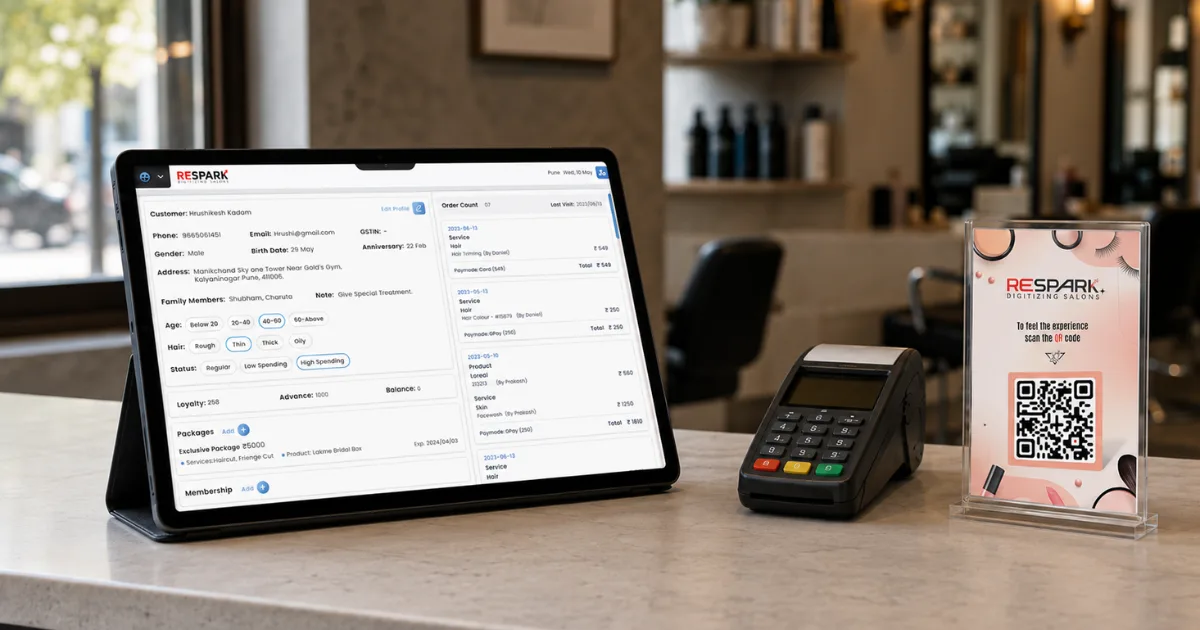
A salon client database is the record of everything you know about each client, including their contact details, service history, preferences, allergies and spending. A good database helps you give every client a personal visit, bring them back on time and notice when someone stops coming. Here is what to track and why each part matters.
Most salons keep this information in scattered places. Some sits in a booking app, some in a stylist’s memory, some in a note on a phone. When a regular’s favourite stylist leaves, half of what you knew about those clients goes too. A proper database keeps it all safe and ready to use.
Table of Contents
- What Is a Salon Client Database?
- Contact and Communication Details
- Appointment and Service History
- Client Preferences and Personal Notes
- Allergies and Safety Records
- Spending, Memberships and Loyalty
- Feedback and Marketing Permissions
- Why a Good Database Brings Clients Back
- Where to Store Your Client Database
- Frequently Asked Questions
What Is a Salon Client Database?
Your client database is a single profile for every person who books with you. It brings together their details, their past visits and what they like, all in one place your whole team can see.
The aim is not to collect data for its own sake. It is to use what you know to give better service and earn more consistent revenue. A good database remembers what a busy team cannot recall across hundreds of clients.
This is what lets you welcome someone back as a regular instead of treating them like a stranger. The information is what makes that possible.
Contact and Communication Details
Start with the basics, because everything else builds on them. You need each client’s name, phone number, email and birthday, along with how they prefer to hear from you.
Knowing the preferred channel matters more than it looks. A client who ignores email but always reads WhatsApp will only get your reminders if you reach them where they actually look.
It also helps to record how each client found you. Tracking whether they came from Google, Instagram or a friend’s referral tells you which channels are worth your time and money.
Appointment and Service History
This is the heart of the database. For each visit, note the date and service, who provided it and how much was paid.
Over time this history reveals patterns you can act on. You can see how often someone visits, which services they favour and the usual gap between their appointments. If someone who normally visits every five weeks has not booked in nine weeks, it is time to reach out.
Service history also helps when staff change. A new stylist can carry on where the last one left off, with the colour formula and past notes already saved.
Client Preferences and Personal Notes
Small details make clients feel known, and that feeling keeps them loyal. Note their preferred stylist, their usual appointment time and whether they like to chat or sit quietly.
Personal notes help just as much. A quick line about an upcoming wedding or a new job gives your team something warm to ask about next time. Clients notice that kind of care, so they stay.
Keep these notes short and useful. One or two clear lines after each visit beat a long entry nobody reads.
Allergies and Safety Records
Some information is about safety rather than marketing. Record any allergies, product sensitivities and past reactions clearly, so your team can see them before a service begins.
This protects your clients first and your business as well. A flagged sensitivity can prevent a painful reaction and the dispute that often follows.
Treat this data with extra care. Collect only what the service needs, store it securely and follow the privacy rules in your market.
Spending, Memberships and Loyalty
Spending data shows you who your most valuable clients are. For each client, track their total spend and average bill, along with retail purchases and any membership or loyalty status.
This turns a vague sense of a good customer into something you can act on. You can recognise your top spenders, offer the right membership to a frequent visitor and see who is due for a renewal.
It also makes billing smoother. A client’s membership benefits and loyalty points apply automatically at checkout, with no manual sums at the counter.
Feedback and Marketing Permissions
Your database should remember what each client thought of their visits. Store their feedback, any complaint raised and how it was resolved. This shows you who is happy and who needs winning back.
Marketing permissions matter here too. Keep a record of clients who want to receive offers and those who do not, so your campaigns reach only the people happy to hear from you.
Together, feedback and permission data let you send the right message to the right person. Our guide on how to get more reviews for your salon shows how to put that feedback to work.
Why a Good Database Brings Clients Back
Here is where the data earns its keep. A complete database does not just sit there. It drives the follow-up that keeps your chairs full.
Say a client has not been in for a while. The system can quietly nudge them to come back. It can send a little offer on their birthday, or flag a good client who has gone quiet so you can give them a call before someone else does.
The best part is that you do not have to remember any of it. The data keeps track for you, and your clients keep coming back without you chasing them. That is really what keeping salon customers loyal comes down to.
Where to Store Your Client Database
A spreadsheet works until it does not. Once you pass a few hundred clients, manual records become slow, easy to lose and impossible to act on quickly.
This is the job of a salon CRM. It holds every client profile in one secure place, updates itself after each visit and turns your data into reminders, offers and reports without manual effort.
The difference is action. A spreadsheet stores information. A proper system uses it, which is what actually grows your salon. To see how it works with your own clients, book a free demo.
Frequently Asked Questions
What information should a salon collect from clients?
Collect contact details, appointment and service history, preferences, any allergies or sensitivities, spending and membership status, and marketing permissions. Together these let you personalise service, keep clients safe and bring them back with timely follow-ups.
Why is a client database important for a salon?
A client database keeps everything you know about your clients in one place, so service stays personal even as your team changes. It also powers automatic reminders, birthday offers and reactivation messages that improve retention and revenue.
Is a spreadsheet enough for a salon client database?
A spreadsheet can work for a very small salon, but it becomes slow and hard to act on as you grow. A salon CRM updates itself after each visit and turns the data into reminders and offers, which a spreadsheet cannot do.
How do salons use client data to increase bookings?
Salons use client data to spot who is due for a visit, send birthday and seasonal offers, and reach out to clients who have not booked in a while. Because the system tracks this automatically, the right message goes out at the right time.
How should salons handle sensitive client information?
Collect only what is needed for the service, such as allergies relevant to a treatment, store it securely and follow local privacy rules. Sensitive health notes should be visible to staff before a service but kept private otherwise.