
Salon clients in 2026 want more than a great hair cut or colour. They want personalised care, a relaxing experience and the convenience of booking at midnight from their phone. Salons that are keeping up with these shifts are seeing better retention and revenue. Here are the seven salon trends every salon owner should know about right now.
Table of Contents
- Scalp and Hair Health Is Driving New Services
- Wellness Becomes a Core Service
- Clients Expect You to Remember Them
- Digital Convenience Is Now Expected
- Clean and Conscious Beauty
- Bold Aesthetics: What Clients Are Booking
- Memberships and Subscriptions as a Business Model
- How to Act on These Salon Trends
- Frequently Asked Questions
1. Scalp and Hair Health Is Driving New Services
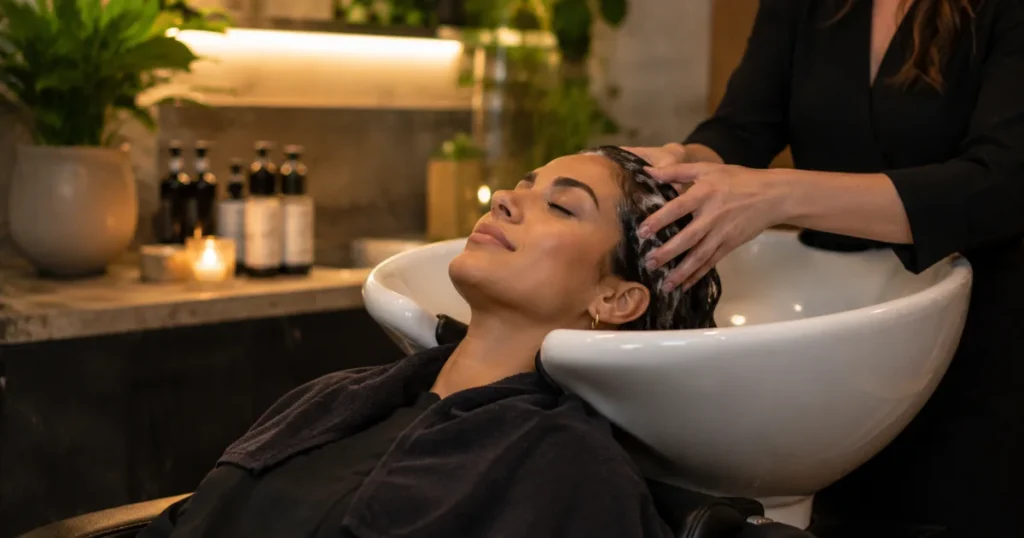
The biggest shift happening in salons right now is the move from appearance-first to health-first. Clients are no longer just asking to look different. They want to look better because their hair and scalp are genuinely in better condition.
Scalp facials and scalp analysis treatments are among the fastest-growing service categories this year. According to Kline PRO, scalp treatment services in US salons grew 9% in the first three quarters of 2025, making it one of the strongest-performing categories in professional hair care. These treatments work on root-level health rather than masking damage with styling products, and clients who experience them tend to rebook consistently because the results are visible over time.
What this means for your salon:
- Offer scalp health consultations as a standalone service or an add-on.
- Stock products with transparent ingredient lists and train your team to talk about them confidently.
- Even a brief scalp check during a consultation builds trust and opens the door to new treatments.
Hair colour is evolving in step with this trend too. High-gloss, light-reflective finishes are dominating booking requests. Clients are moving away from cool ash blondes and flat brunettes toward warm, multi-dimensional tones that look healthy rather than processed. Rich brunettes like deep espresso, soft mocha and glossy chocolate are back strongly after years of balayage dominance. On the lighter end, warm creamy blondes such as candlelit and buttery beige are replacing icy tones. Where reds appear, they tend to be soft copper and warm golden tones rather than bold, high-contrast shades.
2. Wellness Becomes a Core Service
Clients are starting to treat salon visits as self-care time rather than just a maintenance appointment. They want to feel restored when they leave, not just look refreshed.
Salons that have added simple wellness touches are finding they can charge more and keep clients coming back more often. You do not need to turn your salon into a spa to tap into this. Small additions are enough to shift how clients feel about the experience.
The numbers behind this are significant. The Global Wellness Institute’s 2025 Economy Monitor found that the global wellness economy reached $6.8 trillion in 2024 and is forecast to hit $9.8 trillion by 2029. Beauty and personal care is one of the sectors driving that growth, as clients increasingly view their salon visit as part of their broader health and wellbeing routine.
| Wellness Add-On | Service Type | Why It Works |
| Scalp massage (10 min) | Hair | Low cost, high perceived value |
| Aromatherapy during treatment | Any | Creates a memorable sensory experience |
| Hot towel finish | Skincare / Facial | Feels luxurious without high overhead |
| Stress-relief facial | Skin | Combines skin care with relaxation |
| Quiet zone or calming ambiance | Any | Sets you apart from high-turnover salons |
One or two of these added to your existing services can change how clients talk about you to their friends.
3. Clients Expect You to Remember Them
According to McKinsey research, 71% of consumers expect companies to deliver personalised interactions and 76% say they get frustrated when this does not happen. In a salon context, that starts with not making a client repeat themselves.
If someone has to explain their hair history or mention their product sensitivities every single visit, they will look for somewhere that remembers.
The salons doing well on client retention right now are using their data. They track things like:
- Service history so stylists know what has worked and what has not.
- Product preferences including sensitivities and brands clients like.
- Lifestyle notes such as how much time clients spend on styling at home.
- Rebooking patterns so you can reach out before a client goes quiet.
The technology involved is not complicated. A good salon CRM system stores all of this automatically. The harder part is training your team to actually use the notes before each appointment. Salons that do this consistently see better retention numbers.
4. Digital Convenience Is Now Expected
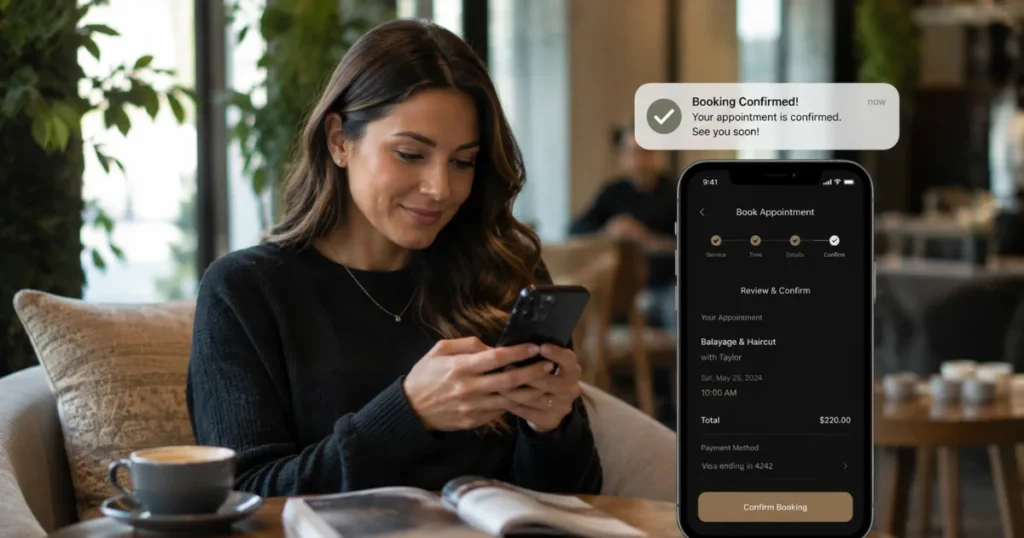
Clients are forming an opinion about your salon before they walk through the door. If your booking process is frustrating, your confirmation message is slow or rebooking requires a phone call, you are already at a disadvantage.
In 2026, these are the basics clients expect:
- Online booking that works on mobile at any hour.
- A confirmation message sent straight away.
- An automated reminder before the appointment.
- A simple way to rebook after the visit.
- Digital receipts and a record of their service history.
The numbers reflect how quickly expectations are shifting. A large-scale survey of over 1,000 salon and spa clients found that 41% of salon regulars are comfortable using an AI receptionist for bookings and 66% see round-the-clock booking availability as very valuable. Clients now judge ease of access as part of the service itself.
Still managing bookings manually or sending reminders one by one?
ReSpark Salon and Spa Software handles online booking, automated reminders, client profiles, loyalty programmes and marketing campaigns from one place. No technical team needed.
Book a Free Demo of ReSpark
5. Clean and Conscious Beauty
Clients in 2026 are reading ingredient labels. The clean beauty movement has grown up and “natural” on a label is no longer enough. Clients want products that are both safe and actually effective.
This combination is being called “Cleanical” beauty, where clean ingredients meet clinical results. Clients are asking harder questions and they expect your team to have real answers.
Research from Mintel’s US Sustainable Beauty Consumer report shows that today’s beauty consumer is moving well beyond vague environmental claims. They want products that are transparent about ingredients, proven to work and produced ethically. Younger clients in particular are placing significant value on brand honesty over brand prestige.
This trend rewards salons that go beyond simply stocking organic products. Train your team to explain what is in the products you use and why those ingredients matter for a particular client’s hair type or skin condition. That level of knowledge builds genuine loyalty.
On the operations side, things like paperless billing, refillable retail products and recycling programmes are becoming real differentiators, especially for younger clients.
6. Bold Aesthetics: What Clients Are Booking
On the style side, 2026 is a year of confident self-expression. Here is what is coming through strongly in bookings and searches right now.
Hair
Pixie cuts and short face-framing styles are holding strong. Warm, glossy brunettes like espresso, mocha and chocolate tones with multi-dimensional shine are replacing the cooler, flatter colours of recent years. Warm creamy blondes are overtaking icy ash tones. Soft copper and golden reds are appearing but in wearable, natural-looking ways rather than bold contrasts. Bobs and lobs remain popular and fringes are making a clear return, styled softly rather than heavily.
Nails
Embellished nail art with gems, chrome finishes and glitter is leading the way. Fresha, one of the largest global beauty booking platforms, reported that cat eye nails saw a 50% year-on-year increase in bookings and polka dot nail designs saw an 830% jump in search interest year-on-year. At the same time, “whisper nails” and sheer minimalist styles are popular with clients who prefer a more natural result.
Skincare services
Azelaic acid is seeing a significant rise in consumer interest. It is worth having on your facial menu and your retail shelf. Clients with sensitive or acne-prone skin respond well to it and appreciate a team that can explain what it does and why it suits their skin.
7. Memberships and Subscriptions as a Business Model
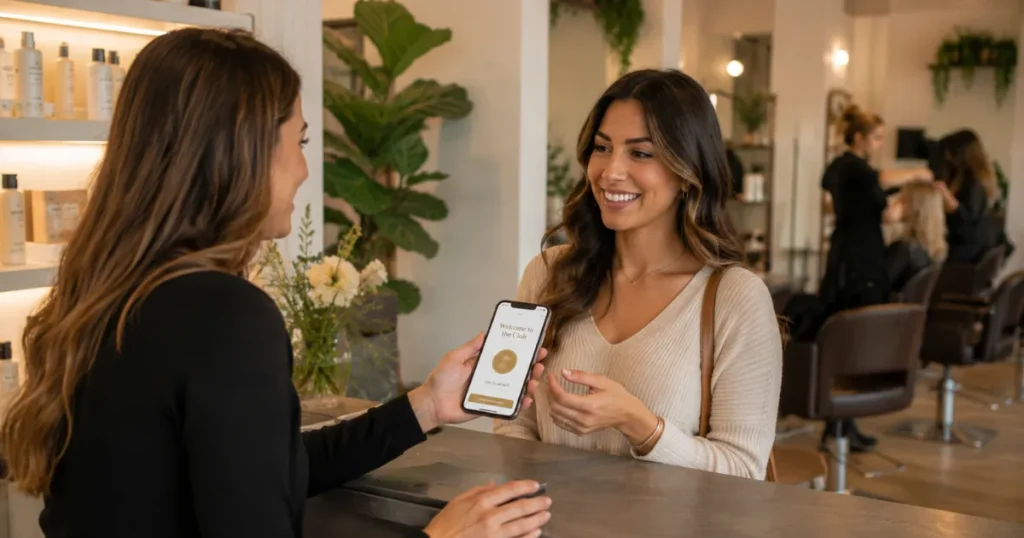
The subscription model has arrived in the beauty industry and it is working well. More salons are offering membership programmes that give clients a set of services each month for a fixed fee. With the global wellness economy now at $6.8 trillion and growing, according to the Global Wellness Institute, clients are spending more consistently on personal care and looking for arrangements that offer them ongoing value rather than one-off bookings.
For salon owners, the appeal is predictable income. For clients, the appeal is value and priority access. Member clients are more likely to return and book more appointments.
A simple three-tier structure is the most common approach:
| Tier | What Is Included | Price Model |
| Essential | 1 core service per month plus a retail discount | Flat monthly fee |
| Premium | 2 services per month plus priority booking and retail discount | Mid-range monthly fee |
| VIP | Unlimited select services plus exclusive perks | Higher monthly fee |
It turns a one-off booking into an ongoing relationship. Clients feel they belong to your salon rather than just visiting it.
ReSpark’s membership and packages feature lets you set this up without any complicated admin, including automated billing and easy redemption tracking.
How to Act on These Salon Trends
You do not need to act on all seven of these at once. The salon owners getting the best results in 2026 are picking two or three salon trends that fit their current situation and going deep on those first.
| If your challenge is… | Start here |
| Clients not rebooking | Personalisation plus CRM and automated follow-ups |
| Quiet mid-week slots | Memberships and off-peak pricing |
| Competing on price | Wellness add-ons and a stronger product story |
| Low flow of new clients | Digital booking and social content around 2026 style trends |
| High no-show rate | Automated appointment reminders |
The thread running through all seven trends is the same. Clients want to feel like your salon was built with them in mind. Whether that shows up through a stylist who remembers their preferences, a booking process that takes ten seconds or a scalp massage they were not expecting, those are the moments that turn a one-time visitor into a regular.
See how ReSpark supports all of these trends: explore salon management tools
Further Reading:
- Salon Marketing Ideas: 30+ Proven Strategies for 2026
- How to Choose the Best Salon Software: The Complete 2026 Guide
- How to Reduce No-Shows at Your Salon: 8 Strategies That Work
- Why Salon Billing Software is Important
- Embracing Technology for Salons
Frequently Asked Questions
What are the biggest salon trends in 2026?
The biggest shifts are around scalp and hair health services, wellness being woven into standard treatments, deeper personalisation using client data and the growth of membership models. On the style side, bold nail art, rich hair colours and clean-ingredient skincare treatments are seeing strong demand.
Is the salon industry growing in 2026?
Yes. According to Fortune Business Insights, the global salon services market is projected to grow from around $284 billion in 2026 to over $522 billion by 2034, at a compound annual growth rate of roughly 7.9%. Growth is being driven by rising consumer spending on personal care, wellness-led services and the adoption of digital booking and management tools.
What do salon clients want most in 2026?
Three things stand out: personalised service that feels tailored to them, easy and accessible digital booking and appointments that feel like genuine self-care rather than a quick in-and-out job.
What hair treatments are trending in 2026?
Scalp health treatments and scalp facials are the standout service trend. On the colour side, warm and glossy tones are leading: rich brunettes like espresso and mocha, warm creamy blondes and soft copper reds. The overall direction is health-signalling colour that looks multi-dimensional and natural rather than flat or heavily processed. Short styles such as pixie cuts and face-framing fringes are also popular.
What nail trends are popular in 2026?
Cat eye nails and embellished styles with gems and chrome finishes are among the top requests. Polka dot nail art has seen over an 830% increase in searches year-on-year. Whisper nails and sheer natural finishes are also popular for clients who prefer a quieter look.
How can a salon stay competitive in 2026?
Focus on three things. Use your client data to make every visit feel personalised. Make booking and communication as smooth and automatic as possible. And add one or two wellness moments to your existing services. Salons that do these things consistently tend to outperform those that keep chasing new techniques without improving how the overall visit feels.
What is Cleanical beauty?
Cleanical refers to products and services that combine clean ingredients with proven clinical results. Clients today are not satisfied with vague “natural” claims. They want to know what is in the products and whether those ingredients genuinely work for their specific needs.