
Running a spa well is not just about delivering good treatments. It is about everything that happens around those treatments, how bookings are handled, how staff are managed, how clients are retained, and how the numbers are tracked at the end of each day.
This guide covers each area of spa management, with practical advice for whoever is responsible for keeping things running.
What’s in this guide
- How You Manage Bookings Sets the Tone for Everything Else
- Managing Therapists and Front Desk Staff Without the Chaos
- How to Structure Your Services and Packages for Better Revenue
- Clean Billing Keeps Clients Happy and Your Finances on Track
- Keeping Stock Under Control So You Never Run Out Mid-Service
- How to Build Client Relationships That Last Beyond the First Visit
- How to Handle Spa Enquiries and Convert Them Into Bookings
- Getting New Clients In and Keeping Existing Ones Engaged
- What to Measure and Why It Matters for Your Spa
- The Daily and Weekly Routine That Keeps a Spa Running Smoothly
- How Spa Management Software Ties Everything Together
- Frequently Asked Questions
How You Manage Bookings Sets the Tone for Everything Else
Every day at a spa starts with the booking calendar. When it is managed well, everything else follows. When it is not, the whole operation feels chaotic.
The basics to have in place: a centralised calendar that all relevant staff can see, the ability for clients to book online at any time, and automated reminders sent before each appointment to reduce no-shows. Walk-ins, cancellations, and rescheduling should all be manageable without creating confusion for the rest of the day.
For spas that offer multi-therapist services such as couples treatments or combined packages, scheduling gets more involved. Each therapist and each treatment room needs to be tracked and reserved correctly to avoid double bookings.
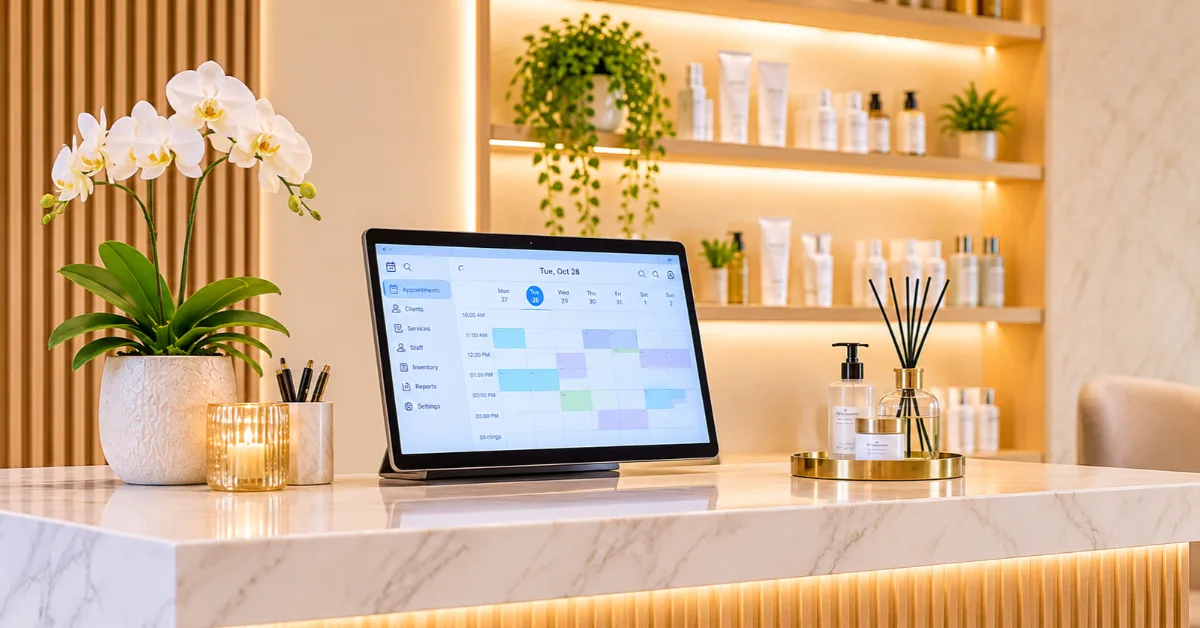
ReSpark’s appointment booking software for spas gives you a real-time calendar, online booking, and automated reminders in one place.
Managing Therapists and Front Desk Staff Without the Chaos
The experience a client has at your spa depends almost entirely on the people delivering it. Getting staff management right is what keeps that experience consistent.
The core of good staff management is clarity. Schedules should be set and communicated well in advance. Therapists should know which clients they are seeing and what services are booked. Responsibilities for receptionists, therapists, and housekeeping should be clearly defined so nothing falls between roles.
Beyond the daily schedule, you also need to track attendance, monitor performance, and handle commissions and incentives accurately. These do not need to be complicated, but they do need to be consistent. Therapists who feel their work is tracked fairly and their earnings are calculated correctly are far more likely to stay.
A short weekly review of therapist utilisation and any client feedback goes a long way. Patterns show up quickly when you look regularly.
How to Structure Your Services and Packages for Better Revenue
Your service menu is a sales tool as much as it is a list of treatments. How it is structured affects what clients choose and how much they spend.
Keep it clear. Each service should have a name that clients understand, a duration, and a price. Grouping services logically such as massages, facials, body treatments, packages. This makes it easier to navigate and easier to upsell.
Packages that bundle complementary treatments tend to increase average spend and make the booking decision simpler for the client. Memberships work well for clients who visit regularly, giving them a reason to commit to the spa rather than shop around. Seasonal promotions and gift vouchers help fill slower periods.
Not every service on your menu is equally profitable. Some take more time and use more product but bring in less revenue. Reviewing this regularly helps you decide what to promote and what to reprice.
ReSpark’s membership and packages software supports prepaid, hourly, group, and discount membership models with OTP verification and balance tracking built in.
Clean Billing Keeps Clients Happy and Your Finances on Track
Checkout is the last impression a client has before they leave. A slow or confusing billing process undercuts everything that came before it.
Every service, product, and package should generate a proper invoice. Payments should be accepted across multiple methods such as cash, card, UPI, wallets, and payment links, without requiring staff to manually reconcile between systems.
Split payments, partial payments, and discounts should all be handled cleanly.
At the end of each day, collections should be reconciled and any discrepancies flagged. This is not just about accuracy, it is also about spotting patterns in revenue that help you make better operational decisions.
ReSpark’s POS and billing handles invoicing, split payments, offline mode, and daily reports from one screen.
Keeping Stock Under Control So You Never Run Out Mid-Service
Spas use a large volume of consumables — oils, creams, skincare products, towels, disposables, and retail stock.
Poor inventory management shows up in two ways: running out of something mid-service, or spending too much on products that sit unused.
- Keep accurate stock records.
- Track how much product each service uses so you can identify waste or overuse early.
- Set minimum stock levels that prompt a reorder before you run out, not after.
- Check expiry dates on skincare and treatment products regularly.
- Keep the products used for treatments separate from the products you sell to clients, so you have a clear view of both.
For spas with more than one location, being able to see inventory across all branches from one place matters. It allows you to transfer stock where it is needed rather than over-ordering at every site.
How to Build Client Relationships That Last Beyond the First Visit
New clients matter, but repeat clients are what build a stable spa business. Retention is where long-term revenue comes from.
A good client record should include their contact details, full service history, treatment preferences, any sensitivities, their membership or package status, and any feedback they have given. This is not about collecting data for its own sake. It is about being able to treat each client as an individual rather than a stranger who books occasionally.
With good client records in place, you can send a birthday offer that feels personal, follow up after a first visit to encourage a second, remind someone when they are due for a treatment, and identify your most loyal clients so you can reward them appropriately.
How to Handle Spa Enquiries and Convert Them Into Bookings
Not every new client books directly. Many start with a question on WhatsApp, a message on Instagram, or a walk-in asking about prices and availability. How quickly and clearly you respond to those enquiries determines how many become actual bookings.
The main things to get right: respond to every enquiry promptly, have consistent answers ready for common questions about services, prices, and availability, follow up on enquiries that did not convert immediately, and track which channels your enquiries are coming from so you know where to invest your attention.
ReSpark’s enquiry management brings WhatsApp, Instagram, Facebook, and walk-in enquiries into one view so nothing gets missed.
Getting New Clients In and Keeping Existing Ones Engaged
A well-run spa still needs a consistent flow of new clients and returning ones. Marketing does not need to be elaborate, but it needs to happen regularly.
Google Business Profile is worth keeping updated with accurate hours, photos, services, and responses to reviews. Most clients searching for a spa nearby will look here first.
Instagram works well for spas because the business is visual. Treatments, results, your space, and your team all make for content that builds trust with potential clients.
WhatsApp marketing reaches your existing client base directly. Promotions, seasonal offers, and appointment reminders all perform well when sent through a channel clients already use every day.
Referrals from satisfied clients are one of the most reliable sources of new bookings. A simple incentive for clients who bring someone new can generate a consistent stream of introductions.
Collecting Google reviews from happy clients is worth making a habit. A strong review profile does real work for local search visibility and client trust.
What to Measure and Why It Matters for Your Spa
You cannot improve what you do not measure. The numbers that matter most for a spa are daily and monthly revenue, appointment volumes, client retention rate, average transaction value, therapist utilisation, cancellation and no-show rates, and inventory costs.
Review these weekly and monthly. The value is in the trend over time, not in any single number. When revenue dips, utilisation data tells you whether the issue is fewer bookings or lower average spend. When retention drops, your CRM data can show you which clients have stopped coming back and when they last visited.
The Daily and Weekly Routine That Keeps a Spa Running Smoothly
Good spa management is largely about routine. The same checks done consistently each day prevent small problems from becoming bigger ones.
Each morning, review the day’s bookings, confirm therapist assignments, check that all rooms and product supplies are ready, and make sure the front desk is briefed. Each evening, reconcile the day’s payments, note any client feedback, and flag anything that needs follow-up.
Weekly, review revenue against target, check therapist performance, look at stock levels, and assess any marketing activity that is running. Monthly, take a broader look at profitability, client retention, and what changes or promotions make sense for the next period.
The spas that run well are not necessarily the ones with the most resources. They are the ones where the people managing them look at the same things consistently and act on what they see.
How Spa Management Software Ties Everything Together
As a spa grows, managing all of the above manually across spreadsheets and WhatsApp threads becomes harder to sustain without errors and gaps.
A spa management platform brings appointments, billing, staff, inventory, CRM, and marketing into one connected system. It reduces admin time, gives you accurate data in real time, and makes operations more consistent whether you are on-site or not.
ReSpark is built for spas, day spas, resort spas, and multi-location beauty businesses. See what ReSpark does for spas
Frequently Asked Questions
What does spa management involve?
Spa management covers the full day-to-day running of a spa business such as appointments, staff, billing, inventory, client relationships, marketing, and performance reports. It is both operational and strategic, involving the work of keeping things running today and the decisions that determine how the business grows over time.
How do I manage staff in a spa?
Set clear schedules and define responsibilities for each role. Track attendance, assign therapists based on availability and skill, monitor performance regularly, and make sure commissions and incentives are calculated accurately. Consistent feedback and regular training keep standards high.
How do I reduce no-shows at my spa?
Automated reminders sent via WhatsApp or SMS 24 to 48 hours before an appointment make a significant difference. Collecting a deposit at the time of booking also reduces last-minute cancellations.
What software do spas use to manage operations?
Most professional spas use a dedicated management platform that covers appointments, billing, CRM, inventory, and marketing in one place. ReSpark is built specifically for spas and beauty businesses. Learn more about ReSpark for spas
Book a free demo and see how ReSpark manages spa operations